Methylprednisolone 16 mg Tablet: Uses, Side Effects, Precautions & More
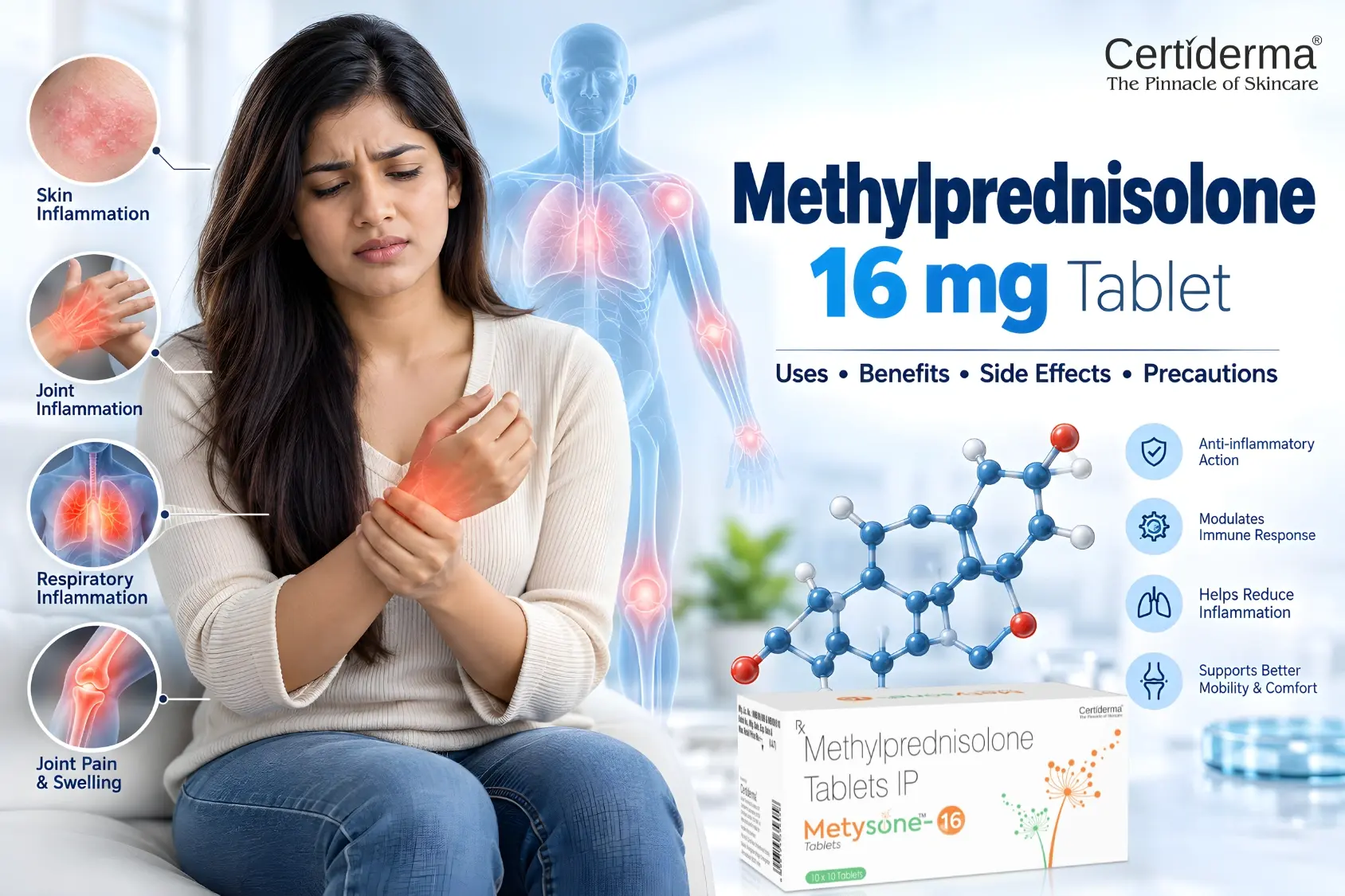
When inflammation becomes difficult to control, doctors may sometimes use a corticosteroid to bring the inflammatory response under control. Methylprednisolone is one such corticosteroid. It can be prescribed for a range of inflammatory, allergic, autoimmune, and other conditions where reducing inflammation or modifying an overactive immune response is medically appropriate.
Metysone 16 Tablet contains Methylprednisolone 16 mg . Because corticosteroids can affect several systems in the body, this is not a medicine that should be started, stopped, or adjusted casually. The appropriate dose and duration depend on the condition being treated and the patient's individual circumstances.
This article explains what methylprednisolone 16 mg is, why it may be prescribed, how it works, possible side effects, important precautions, and questions patients commonly ask.
Important: This information is for educational purposes and does not replace advice from a qualified doctor or pharmacist.
Metysone 16 Tablet at a Glance
| Product detail | Information |
|---|---|
| Brand name | Metysone 16 Tablet |
| Active ingredient | Methylprednisolone |
| Strength | 16 mg |
| Dosage form | Tablet |
| Pack size | 10 × 10 tablets |
| Drug class | Corticosteroid / glucocorticoid |
| Route | Oral |
| Manufacturer/Brand | Certiderma |
| Use | As directed by a qualified healthcare professional |
What Is Methylprednisolone 16 mg?
Methylprednisolone is a synthetic glucocorticoid, a type of corticosteroid medicine . Glucocorticoids have important effects on inflammation and immune activity. Depending on the medical condition, they can help reduce swelling, redness, discomfort and other manifestations associated with inflammatory processes.
The 16 mg strength refers to the amount of methylprednisolone present in each tablet. It is one of the strengths in which oral methylprednisolone tablets are available.
It is worth remembering that the strength of a tablet does not by itself determine whether it is appropriate for a particular person. Doctors consider the diagnosis, severity of the condition, treatment duration, other medicines and the patient's medical history before deciding on a corticosteroid regimen.
How Does Methylprednisolone Work?
Inflammation is part of the body's natural response to injury, infection and other triggers. In some diseases, however, inflammation or immune activity becomes excessive or persistent.
Methylprednisolone works by changing inflammatory and immune responses. Its glucocorticoid action affects multiple biological pathways involved in inflammation. This is why the medicine can have applications across several medical specialties rather than being limited to one particular disease.
The same broad action that makes corticosteroids useful can also explain why they require careful medical supervision. Their effects are not limited to one organ or one symptom.
What Is Methylprednisolone 16 mg Used For?
There is no single condition for which methylprednisolone is universally prescribed. Depending on the clinical situation, doctors may use oral methylprednisolone for selected inflammatory, allergic, rheumatic, dermatological, respiratory and immune-related disorders.
Official drug information lists a broad range of potential indications, including certain rheumatic disorders, skin conditions, severe allergic conditions, respiratory disorders and other inflammatory or immune-related diseases.
For example, a healthcare professional may consider a corticosteroid such as methylprednisolone when inflammation is an important part of a condition and steroid treatment is judged appropriate.
Conditions may include:
- Certain inflammatory joint and rheumatic disorders
- Selected skin and dermatological conditions
- Severe allergic conditions
- Certain respiratory conditions
- Some autoimmune or immune-mediated disorders
- Selected inflammatory disorders affecting other body systems
The exact indication should always come from the treating doctor. Methylprednisolone should not be used simply because two people appear to have similar symptoms.
Why Is the 16 mg Strength Used?
A common question is: “Why 16 mg?”
The answer is that corticosteroid treatment is individualized. The appropriate strength and treatment schedule can vary substantially depending on the disease, its severity, response to treatment and whether the medicine is being started, continued or reduced.
A 16 mg tablet may therefore form part of a treatment plan chosen by a healthcare professional. It should not be interpreted as a standard dose for every patient.
Official prescribing information emphasizes that corticosteroid dosing is individualized and that treatment should use the lowest appropriate exposure needed for the condition. When corticosteroid treatment is reduced after appropriate prolonged use, the reduction may need to be gradual rather than abrupt.
How Should Metysone 16 Tablet Be Taken?
Take Metysone 16 Tablet exactly according to the instructions provided by your doctor.
There is no universally suitable dosing schedule that can be recommended from the tablet strength alone. Your doctor may determine the timing, frequency and duration according to your condition and response to treatment.
A few practical points are important:
- Do not take more tablets than prescribed.
- Do not change the frequency yourself.
- Do not share corticosteroid medication with another person.
- If the medicine causes stomach discomfort, taking methylprednisolone with food or milk may help, unless your healthcare professional has given different instructions.
- If you forget a dose, follow the missed-dose instructions provided by your doctor or pharmacist rather than automatically taking an extra dose.
Can You Stop Methylprednisolone Suddenly?
This is one of the most important precautions.
Do not stop methylprednisolone abruptly without medical advice, particularly if you have been taking it for a prolonged period or at higher doses. Depending on the circumstances, the dose may need to be reduced gradually so that the body can adjust.
The appropriate tapering plan is individual and should be determined by the treating clinician.
Methylprednisolone 16 mg Side Effects
Like other corticosteroids, methylprednisolone can cause side effects. Not everyone experiences them, and the likelihood can depend on factors such as dose, duration and individual susceptibility.
Some possible effects include:
- Stomach irritation or upset stomach
- Headache
- Dizziness
- Difficulty sleeping
- Restlessness
- Mood changes
- Increased appetite
- Easy bruising
- Acne
- Fluid retention
- Increased blood pressure
- Changes in blood glucose
- Muscle weakness
MedlinePlus also notes that methylprednisolone can affect the immune response and may make a person more susceptible to infections.
Longer-term corticosteroid exposure can be associated with additional risks, including bone loss, cataracts, glaucoma and other systemic effects.
When Should You Contact a Doctor?
Seek medical advice promptly if you develop symptoms such as:
- Signs of a significant infection
- Persistent fever or severe illness
- Serious allergic symptoms
- Significant vision changes
- Severe weakness
- Black or tarry stools
- Unusual swelling
- Severe or concerning mood or behavioural changes
These symptoms do not necessarily mean that methylprednisolone is the cause, but they warrant appropriate medical assessment.
Important Precautions Before Taking Methylprednisolone
Methylprednisolone is a medicine where your existing medical history matters.
Tell your healthcare professional if you have or have previously had:
- Diabetes
- High blood pressure
- Osteoporosis
- Liver or kidney problems
- Heart disease
- Stomach ulcers or significant gastrointestinal problems
- Tuberculosis or another significant infection
- Eye problems such as glaucoma or certain eye infections
- Seizures
- Mental health conditions
- Myasthenia gravis
- Thyroid disorders
Your doctor should also know about other medicines, vitamins, supplements and herbal products you are taking.
Infection Risk
Corticosteroids can suppress aspects of the immune system. This can increase susceptibility to infections and may sometimes make the usual signs of infection less obvious.
If you develop signs of infection while taking methylprednisolone, contact your healthcare professional rather than assuming the symptoms will resolve on their own.
Methylprednisolone and Diabetes
People with diabetes should take particular care during corticosteroid treatment.
Methylprednisolone can increase blood glucose levels in some patients. If you monitor your blood sugar, your healthcare professional may recommend closer monitoring during treatment and may adjust other diabetes medicines when necessary.
This is one reason why a corticosteroid treatment plan should be based on the individual patient's medical history.
Methylprednisolone and Blood Pressure or Fluid Retention
Corticosteroids can influence fluid and electrolyte balance. Some patients may experience fluid retention or an increase in blood pressure.
If you already have hypertension, heart problems or a condition where fluid balance is important, make sure your doctor knows before starting treatment.
Methylprednisolone During Pregnancy or Breastfeeding
If you are pregnant, planning pregnancy or breastfeeding, discuss methylprednisolone use with your healthcare professional.
The decision to use a corticosteroid during pregnancy should consider the potential benefits and possible risks rather than being made solely on the basis of the medicine's name or strength.
Methylprednisolone Drug Interactions
Methylprednisolone may interact with other medicines. The exact interaction risk depends on what else you are taking.
Always provide your doctor or pharmacist with a complete list of:
- Prescription medicines
- Over-the-counter medicines
- Painkillers
- Vitamins
- Herbal products
- Nutritional supplements
Certain medicines may affect corticosteroid-related risks or change how the treatment should be monitored. MedlinePlus specifically advises patients to discuss medicines such as aspirin and other products with their healthcare professional before using them alongside methylprednisolone.
Do not start a new medicine or supplement during corticosteroid treatment without checking whether it is appropriate.
What Should You Avoid While Taking Methylprednisolone?
There is no single list of foods that every patient must avoid. However, your doctor may recommend dietary adjustments depending on your condition and the dose and duration of treatment.
For some patients, dietary advice may include attention to sodium, potassium or protein intake.
Alcohol can also be a concern in certain situations, particularly in patients with a history of stomach ulcers or those taking medicines that can irritate the gastrointestinal tract. Discuss alcohol consumption with your healthcare professional if you are taking methylprednisolone.
Metysone 16 Tablet: A Simple Way to Understand Its Role
It can be tempting to think of a corticosteroid simply as a medicine that “reduces inflammation.” That description is correct, but incomplete.
Methylprednisolone also changes immune activity and can influence several body systems. This is why it may be useful for different inflammatory disorders, but also why doctors consider the dose, duration, medical history and monitoring requirements before prescribing it.
In practical terms, the medicine is best viewed as a clinician-guided treatment rather than a routine tablet for everyday inflammation.
Frequently Asked Questions
1. What is Metysone 16 Tablet?
Metysone 16 Tablet contains Methylprednisolone 16 mg, a glucocorticoid corticosteroid used under medical supervision for selected inflammatory, allergic and immune-related conditions.
2. What is Methylprednisolone 16 mg used for?
It may be used for selected inflammatory, allergic, rheumatic, dermatological, respiratory and immune-related disorders. The appropriate indication depends on the patient's diagnosis and the treating doctor's assessment.
3. Is Methylprednisolone 16 mg an antibiotic?
No. Methylprednisolone is a corticosteroid, not an antibiotic. It modifies inflammation and immune activity rather than directly treating bacterial infections.
4. Can Methylprednisolone 16 mg be taken without a doctor's advice?
Self-treatment is not recommended. Corticosteroids can affect immunity, blood glucose, blood pressure and other body systems, so they should be used according to appropriate medical advice.
5. Can I stop Metysone 16 suddenly?
Do not stop it suddenly without consulting your doctor, particularly after prolonged treatment or higher-dose therapy. Some patients require a gradual reduction in dose.
6. Does Methylprednisolone cause sleep problems?
Difficulty sleeping, restlessness and other mood or behavioural changes can occur in some people taking corticosteroids. Inform your healthcare professional if these effects become troublesome.
7. Can Methylprednisolone increase blood sugar?
Yes. Corticosteroids can raise blood glucose in some patients. People with diabetes may need closer monitoring during treatment.
8. Does Methylprednisolone weaken immunity?
Methylprednisolone can suppress immune responses, particularly at higher corticosteroid exposures. This can increase infection risk and may mask some signs of infection.
9. Is Methylprednisolone the same as a painkiller?
No. It is not a conventional painkiller. Any improvement in pain may occur because the medicine reduces inflammation in conditions where inflammation contributes to symptoms.
10. What should I tell my doctor before taking Methylprednisolone?
Tell your doctor about existing medical conditions, allergies, infections, pregnancy or breastfeeding, previous steroid treatment and all medicines or supplements you currently use. This information can help the clinician decide whether methylprednisolone is appropriate and how it should be monitored.
Composition of Metysone 16 Tablet
| Ingredient | Strength | Role |
|---|---|---|
| Methylprednisolone | 16 mg | Active corticosteroid ingredient |
Dosage form: Tablet
Pack size: 10 × 10 tablets
The information above reflects the product details provided for Metysone 16 Tablet . Excipients have not been listed because the specific inactive-ingredient composition for this Certiderma product was not provided.
Why Medical Supervision Matters With Corticosteroids
Corticosteroids can be highly useful when prescribed for the right patient and condition, but they are not medicines to experiment with.
The important questions are not simply “What does methylprednisolone treat?” or “What is the 16 mg dose?” The more relevant questions are:
- What condition is being treated?
- Is a corticosteroid appropriate?
- How long should treatment continue?
- What other medicines is the patient taking?
- Does the patient have diabetes, hypertension, an infection or another condition that requires additional caution?
- Does treatment need to be reduced gradually?
Those decisions belong with the treating healthcare professional.
About Metysone 16 Tablet by Certiderma
Metysone 16 Tablet is presented as a methylprednisolone 16 mg oral tablet in the Certiderma pharmaceutical portfolio.
For healthcare professionals, distributors and pharmaceutical business partners seeking dermatology and pharmaceutical products, Certiderma is part of Sarian Healthcare and operates in the pharmaceutical and dermatology product segment.
For product-specific information, always refer to the applicable product documentation and professional medical guidance.
Final Takeaway
Methylprednisolone 16 mg is a systemic corticosteroid with effects on both inflammation and immune activity. It can have an important role in the management of selected medical conditions, but its benefits have to be balanced against potential adverse effects.
If Metysone 16 Tablet has been prescribed to you, follow the treatment instructions provided by your healthcare professional. Avoid changing the dose or stopping treatment on your own, and tell your doctor about other medicines, existing health conditions and any unusual symptoms that develop during treatment.
The right corticosteroid treatment is not simply about choosing a particular strength. It is about using the medicine for the right patient, for the right reason, at the appropriate dose and for the appropriate duration.
Medical Disclaimer
This article is intended for general educational and informational purposes. It does not provide a diagnosis, prescribe treatment or replace consultation with a qualified doctor, dermatologist, pharmacist or other healthcare professional.
Methylprednisolone is a systemic corticosteroid and can cause clinically important effects and interactions. The appropriate dose and duration vary according to the medical condition and individual patient factors. Do not start, change or discontinue corticosteroid treatment without appropriate professional advice.
Sources for Medical Reference
- MedlinePlus – Methylprednisolone
MedlinePlus – Methylprednisolone
- Methylprednisolone ke uses, dosage instructions, precautions aur stopping-related information ke liye. - DailyMed – MEDROL (Methylprednisolone) Tablets
DailyMed – MEDROL Methylprednisolone Tablets
- Composition, corticosteroid action, indications, precautions aur drug interactions ke official prescribing information ke liye. - DailyMed – Methylprednisolone Tablets: Warnings & Precautions
DailyMed – Methylprednisolone Warnings & Precautions
- Immunosuppression, infection risk, contraindications aur corticosteroid-related warnings ke liye.