Complete Guide to Vitiligo Management: Causes, Symptoms, Diagnosis & Treatment

Vitiligo is a long-term skin pigmentation disorder that causes lighter or completely white patches to appear on different parts of the body. It develops when melanocytes the cells responsible for producing melanin are damaged, destroyed, or stop functioning properly.
For many people, vitiligo is more than a change in skin colour. Visible patches can affect confidence, social interactions, emotional well-being, and overall quality of life. The condition can affect people of any age, gender, or skin type, and its course can vary considerably from one person to another.
The good news is that vitiligo can be managed. Modern dermatology offers several approaches, including topical medicines, phototherapy, oral therapies in selected cases, surgical procedures for stable disease, and supportive skin-care strategies.
In this comprehensive guide, we discuss vitiligo causes, symptoms, types, diagnosis, treatment options, phototherapy, lifestyle considerations, and dermatologist-guided care, along with an overview of Certiderma's specialized vitiligo-focused product portfolio.
What Is Vitiligo?
Vitiligo is a chronic pigmentation disorder in which areas of the skin lose their normal colour because of a reduction or loss of functional melanocytes.
The exact mechanism is complex, but vitiligo is widely considered to have an autoimmune component. In susceptible individuals, the immune system may target melanocytes, resulting in depigmented patches.
Vitiligo may appear on almost any part of the body, including:
- Face
- Hands and feet
- Arms and legs
- Around the eyes and mouth
- Fingers and toes
- Genital areas
- Scalp
- Eyebrows and eyelashes
- Beard and other body hair
The condition is not contagious and cannot be transmitted through touching, sharing food, or close personal contact.
Key Facts About Vitiligo
- Vitiligo is not an infectious disease.
- It is not caused by poor hygiene.
- It can affect people with every skin tone.
- It may begin during childhood, adolescence, or adulthood.
- The progression can be unpredictable.
- It may affect both skin and hair pigmentation.
- Emotional and psychological support can be an important part of comprehensive care.
For a deeper look at modern treatment approaches, including PUVA therapy and dermatologist-guided repigmentation strategies, read our guide to vitiligo treatment in India .
What Causes Vitiligo?
There is no single cause of vitiligo. Researchers believe that several genetic, immune, environmental, and cellular factors may contribute to its development.
1. Autoimmune Factors
An abnormal immune response is believed to play an important role in many cases of vitiligo. The immune system may mistakenly recognize melanocytes as harmful and damage them, resulting in loss of pigmentation.
2. Genetic Factors
Genetics can influence susceptibility to vitiligo. People with a family history of vitiligo or certain autoimmune conditions may have an increased likelihood of developing the disorder.
However, having a family history does not necessarily mean that a person will develop vitiligo.
3. Oxidative Stress
Melanocytes are sensitive to oxidative damage. An imbalance between free radicals and the body's antioxidant defenses has been investigated as one of the factors involved in melanocyte dysfunction and destruction.
4. Environmental and Physical Triggers
In some individuals, depigmentation may appear or become more noticeable following certain triggers, such as:
Significant sunburn
Repeated friction or skin injury
Cuts or other trauma to the skin
Certain chemical exposures
Periods of significant physical or emotional stress
Understanding potential triggers is only one part of comprehensive vitiligo care. Diagnosis, disease activity, treatment selection, and ongoing dermatological monitoring should be considered together.
Not everyone with vitiligo will experience the same triggers, and a trigger does not necessarily cause vitiligo on its own.
What Are the Symptoms of Vitiligo?
The most recognizable sign of vitiligo is the development of depigmented or white patches on the skin.
The appearance and progression of these patches can differ significantly between individuals.
Common Signs of Vitiligo
White or Depigmented Patches
Vitiligo commonly begins as a lighter patch that gradually becomes more noticeable as pigment is lost.
Premature Whitening of Hair
Hair growing from affected areas may become white or lose its normal colour. This can involve the scalp, eyebrows, eyelashes, beard, or other body hair.
Pigment Loss Around the Eyes and Mouth
The areas surrounding natural body openings, particularly the eyes and mouth, can sometimes be affected.
Symmetrical Pigment Loss
Non-segmental vitiligo frequently affects corresponding areas on both sides of the body.
Progressive Depigmentation
Some patients experience gradual enlargement of existing patches or the appearance of new patches over time.
If you notice unexplained white patches, it is advisable to consult a dermatologist rather than assuming that every light-coloured patch is vitiligo.
Types of Vitiligo
Vitiligo is classified according to the distribution and pattern of depigmentation.
Non-Segmental Vitiligo
Non-segmental vitiligo is the most common form. It often affects both sides of the body in a relatively symmetrical pattern.
Commonly affected areas include:
- Hands
- Face
- Feet
- Knees
- Elbows
- Areas around body openings
The disease may remain stable for periods and may also experience phases of progression.
Segmental Vitiligo
Segmental vitiligo generally affects one side or a particular segment of the body.
It often:
- Develops earlier in life
- Progresses relatively quickly during the initial phase
- Becomes stable sooner than many non-segmental cases
Treatment planning may differ depending on whether the disease is active or stable.
Focal Vitiligo
Focal vitiligo describes depigmentation confined to a limited area without a broader characteristic distribution.
Extensive or Universal Vitiligo
In rare, extensive cases, pigmentation loss may involve a very large proportion of the body's skin surface.
Because the extent and progression of vitiligo vary, professional dermatological assessment is important before selecting a treatment approach.
How Is Vitiligo Diagnosed?
A dermatologist can usually diagnose vitiligo through a combination of clinical examination and medical history.
Medical History
The dermatologist may ask about:
- When the patches first appeared
- Whether new patches are developing
- Family history
- Previous skin trauma or sunburn
- Other medical conditions
- Previous treatments
- Associated autoimmune conditions
Physical Examination
The pattern, location, size, and distribution of depigmented areas are assessed carefully.
Wood's Lamp Examination
A Wood's lamp uses ultraviolet light to make areas of depigmentation easier to identify, particularly in certain skin types or when the colour difference is subtle.
Additional Investigations
Depending on the patient's history and symptoms, a dermatologist may recommend additional tests to evaluate associated conditions or rule out other causes of pigmentation loss.
Vitiligo Treatment Options
There is no single best treatment for vitiligo that works for every patient. Treatment decisions depend on factors such as:
- Age
- Type of vitiligo
- Location of patches
- Extent of depigmentation
- Whether the disease is actively progressing
- Previous treatment response
- Patient preferences
- Overall health
The primary goals may include controlling disease activity, encouraging repigmentation where appropriate, and helping patients feel comfortable with their appearance.
1. Topical Treatments for Vitiligo
Topical medicines are commonly considered for localized vitiligo, depending on the affected body area, disease activity, patient age, and overall clinical assessment. The choice of topical therapy should always be made by a qualified dermatologist because different formulations have different indications, strengths, precautions, and appropriate application areas.
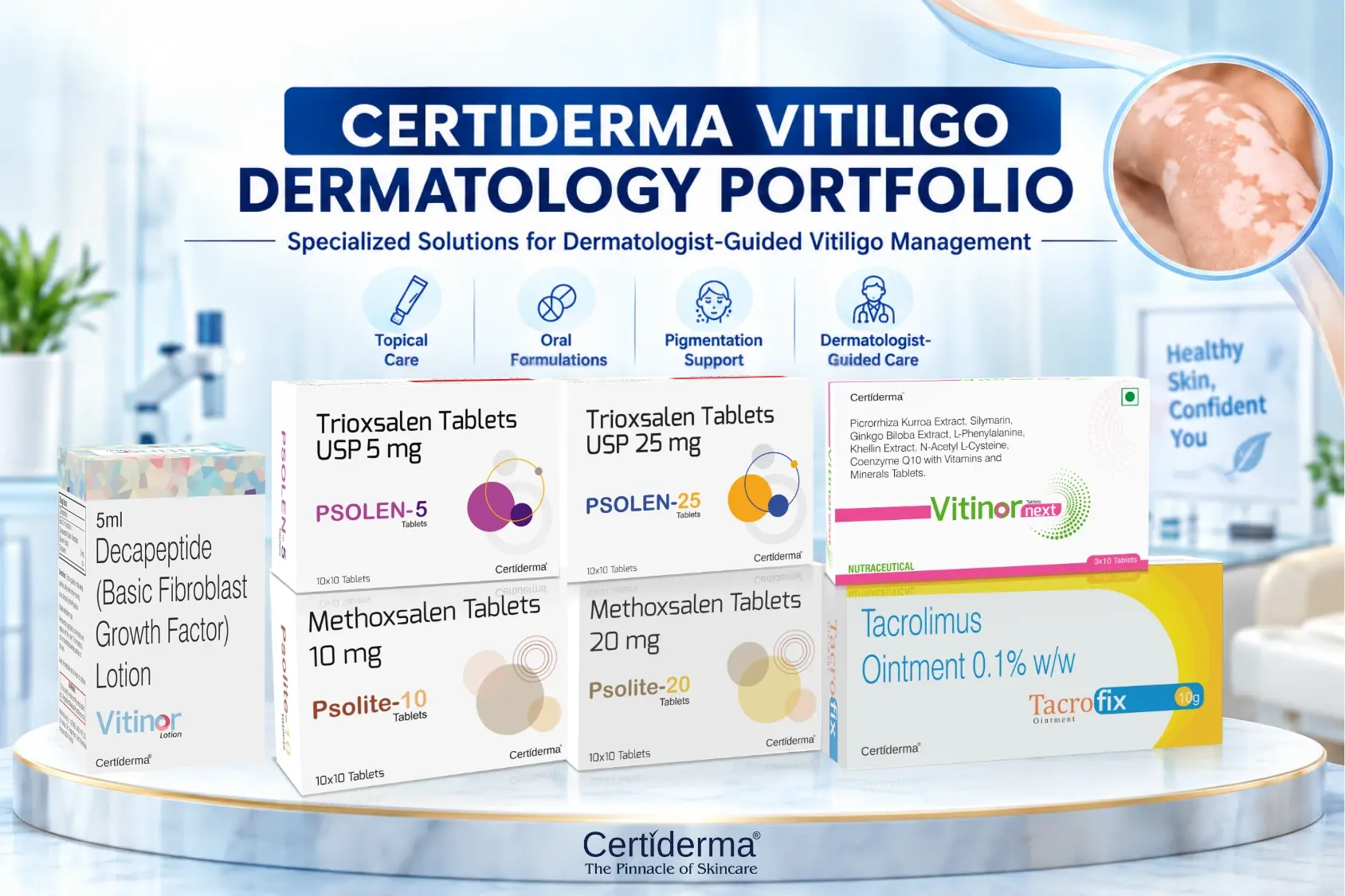
TACROFIX Ointment
Composition: Tacrolimus 1% w/w
TACROFIX Ointment from Certiderma is a specialized topical dermatology formulation containing Tacrolimus 1% w/w. It is part of Certiderma's dermatology portfolio and may be considered by healthcare professionals as part of an individualized treatment plan where clinically appropriate.
Because tacrolimus is a prescription medicine, patients should use TACROFIX Ointment only under the guidance of a qualified healthcare professional and follow the recommended application frequency and duration.
Product Details:
- Product Name: TACROFIX
- Composition: Tacrolimus 1% w/w
- Dosage Form: Ointment
- Category: Topical Dermatology
- Application: As directed by a qualified healthcare professional
Explore Product: TACROFIX Ointment
VITINOR Lotion
Composition: Decapeptide (Basic Fibroblast Growth Factor) 5 mg
VITINOR Lotion is a specialized topical formulation in Certiderma's pigmentation-focused dermatology portfolio. It contains Decapeptide (Basic Fibroblast Growth Factor) 5 mg and is intended for topical application according to the directions provided by a qualified healthcare professional.
The appropriate application method, frequency, and duration should be determined based on the individual's condition and dermatologist-guided treatment plan.
Product Details:
- Product Name: VITINOR
- Composition: Decapeptide (Basic Fibroblast Growth Factor) 5 mg
- Dosage Form: Lotion
- Category: Pigmentation / Dermatology
- Application: As directed by a qualified healthcare professional
Explore Product: VITINOR Lotion
2. Oral Treatment Options for Vitiligo
Depending on the type of vitiligo, disease activity, extent of pigmentation loss, treatment objectives, and individual patient factors, dermatologists may consider selected oral formulations as part of a comprehensive management strategy.
Certiderma's vitiligo-focused portfolio includes formulations containing Trioxsalen, Methoxsalen, and a combination of nutritional and antioxidant ingredients. Some products may be used in specific dermatologist-supervised treatment protocols and should not be self-medicated.
PSOLEN-5 Tablets
Composition: Trioxsalen 5 mg
PSOLEN-5 Tablets contain Trioxsalen 5 mg, a photosensitizing agent used in specific PUVA-related treatment protocols under appropriate medical supervision.
When prescribed as part of a phototherapy regimen, the medicine and ultraviolet exposure need to be carefully coordinated by a qualified healthcare professional.
Product Details:
- Product Name: PSOLEN-5
- Composition: Trioxsalen 5 mg
- Dosage Form: Tablet
- Category: Dermatology / Phototherapy Support
- Use: Only under qualified healthcare professional supervision
Explore Product: PSOLEN-5 Tablets
PSOLEN-25 Tablets
Composition: Trioxsalen 25 mg
PSOLEN-25 Tablets contain Trioxsalen 25 mg and are part of Certiderma's specialized dermatology portfolio. Trioxsalen is a photosensitizing agent that may be incorporated into selected PUVA-based treatment protocols under specialist supervision.
The dosage, timing, and phototherapy schedule should be determined by the treating healthcare professional.
Product Details:
- Product Name: PSOLEN-25
- Composition: Trioxsalen 25 mg
- Dosage Form: Tablet
- Category: Dermatology / Phototherapy Support
- Use: As prescribed by a qualified healthcare professional
Explore Product: PSOLEN-25 Tablets
PSOLITE-10 Tablets
Composition: Methoxsalen 10 mg
PSOLITE-10 Tablets contain Methoxsalen 10 mg, a photosensitizing medicine associated with PUVA-based dermatological treatment. Its use requires appropriate medical supervision because methoxsalen is used in combination with controlled UVA exposure in relevant treatment protocols.
Product Details:
- Product Name: PSOLITE-10
- Composition: Methoxsalen 10 mg
- Dosage Form: Tablet
- Category: Dermatology / Phototherapy Support
- Use: Under qualified healthcare professional supervision
Explore Product: PSOLITE-10 Tablets
PSOLITE-20 Tablets
Composition: Methoxsalen 20 mg
PSOLITE-20 Tablets contain Methoxsalen 20 mg and form part of Certiderma's specialized dermatology portfolio. Methoxsalen may be used in specific PUVA treatment protocols where clinically appropriate and under controlled medical supervision.
Patients should not take methoxsalen-containing medicines or undergo PUVA treatment without appropriate professional guidance.
Product Details:
- Product Name: PSOLITE-20
- Composition: Methoxsalen 20 mg
- Dosage Form: Tablet
- Category: Dermatology / Phototherapy Support
- Use: As prescribed and monitored by a qualified healthcare professional
Explore Product: PSOLITE-20 Tablets
VITINOR NEXT Tablets
Composition:
Picrorhiza kurroa Extract 200 mg + Silymarin 250 mg + Ginkgo Biloba Extract 120 mg + L-Phenylalanine 300 mg + Khellin Extract 100 mg + N-Acetyl-L-Cysteine 50 mg + Coenzyme Q10 5 mg + Vitamins and Minerals
VITINOR NEXT Tablets contain a combination of botanical extracts, amino acids, antioxidant-supporting ingredients, coenzyme Q10, vitamins, and minerals. The formulation is designed as a comprehensive nutritional and antioxidant-supportive approach within Certiderma's pigmentation-focused portfolio.
Its formulation includes L-Phenylalanine, Khellin Extract, N-Acetyl-L-Cysteine, Coenzyme Q10, Silymarin, Ginkgo Biloba Extract, and Picrorhiza kurroa Extract, along with vitamins and minerals.
These ingredients are included to provide nutritional and antioxidant support as part of a broader, dermatologist-guided approach to vitiligo management. VITINOR NEXT should not be considered a substitute for individualized medical treatment or prescribed therapy.
Product Details:
- Product Name: VITINOR NEXT
- Dosage Form: Tablet
- Category: Dermatology / Nutritional & Antioxidant Support
- Key Ingredients: Picrorhiza kurroa Extract, Silymarin, Ginkgo Biloba Extract, L-Phenylalanine, Khellin Extract, N-Acetyl-L-Cysteine and Coenzyme Q10
- Additional Ingredients: Vitamins and Minerals
- Use: As recommended by a qualified healthcare professional
Explore Product: VITINOR NEXT Tablets
Important Note About Oral Vitiligo Products
The appropriate medicine, dosage, treatment duration, and monitoring requirements vary between patients. PSOLEN and PSOLITE formulations should only be used according to a qualified healthcare professional's instructions, particularly when combined with phototherapy.
Patients should not start, stop, combine, or change the dose of any prescription medicine without professional medical advice.
3. Phototherapy for Vitiligo
Phototherapy is an important treatment option in modern vitiligo management. It involves controlled exposure to specific ultraviolet wavelengths under professional supervision.
Phototherapy may be used alone or combined with other treatments depending on the patient's condition.
Narrowband UVB Phototherapy
Narrowband UVB, commonly referred to as NB-UVB, is an established phototherapy approach used for many patients with vitiligo.
It may be particularly useful when:
- Multiple body areas are affected
- Vitiligo is widespread
- Repigmentation is the treatment goal
- A localized topical approach is insufficient
Treatment typically requires repeated sessions according to a dermatologist-prescribed schedule.
PUVA Therapy
PUVA combines a photosensitizing medicine with UVA exposure. Its use depends on individual clinical circumstances, availability, and specialist assessment.
Because phototherapy involves ultraviolet radiation, it should be performed under appropriate medical supervision.
4. Surgical Treatment for Stable Vitiligo
For selected patients with stable vitiligo, surgical approaches may be considered when appropriate.
Possible procedures include:
- Skin grafting
- Melanocyte-keratinocyte transplantation
- Other cellular or tissue-based grafting techniques
Surgical treatment is generally considered only after careful assessment of disease stability and suitability.
5. Depigmentation Therapy
For individuals with very extensive vitiligo where repigmentation is not practical or desired, specialist-supervised depigmentation may be considered in selected circumstances.
This is a significant and generally irreversible treatment decision and requires thorough consultation with an experienced dermatologist.
Understanding the Role of Phototherapy in Vitiligo Care
Phototherapy can play an important role in a comprehensive treatment strategy, particularly when repigmentation is desired.
Treatment response can depend on several factors, including:
- Body location
- Duration of vitiligo
- Disease activity
- Patient age
- Treatment consistency
- Combination with other therapies
Areas such as the face and neck may respond differently from areas such as the hands and feet.
Patients should understand that vitiligo treatment often requires patience. Repigmentation may take months, and results can vary between individuals.
Can Vitiligo Be Completely Cured?
One of the most common questions patients ask is whether vitiligo can be permanently cured.
At present, there is no universal cure that permanently eliminates vitiligo in every patient.
However, several treatments can help manage vitiligo, control disease activity, and encourage repigmentation in appropriate patients.
Treatment outcomes are influenced by the type of vitiligo, disease activity, body location, duration, and individual response.
A dermatologist can help establish realistic treatment goals and select the most appropriate management strategy.
Certiderma's Vitiligo-Focused Dermatology Portfolio
Certiderma is a dermatology-focused pharmaceutical brand committed to supporting healthcare professionals with specialized formulations across skin, hair, pigmentation, and related dermatological care.
Its vitiligo-focused portfolio includes:
- PSOLEN-5 Tablets
- PSOLEN-25 Tablets
- PSOLITE-10 Tablets
- PSOLITE-20 Tablets
- VITINOR NEXT Tablets
- VITINOR Lotion
- TACROFIX Ointment
These products are intended to support dermatologist-guided treatment and patient management, rather than replacing professional diagnosis or individualized medical advice.
Why Certiderma for Dermatology Care?
Certiderma focuses on:
- Dermatology-oriented pharmaceutical solutions
- Specialized skin and pigmentation formulations
- Quality-focused manufacturing
- Healthcare-professional-oriented product development
- A broad dermatology portfolio
- Continued focus on skin health and treatment support
For healthcare professionals, selecting a reliable dermatology-focused pharmaceutical partner can help support consistent access to specialized formulations.
Nutrition and Vitiligo: What Patients Should Know
A healthy, balanced diet supports overall health and normal skin function. However, diet alone should not be considered a replacement for evidence-based vitiligo treatment.
Nutrients commonly discussed in relation to skin health include:
- Vitamin C
- Vitamin E
- Zinc
- Copper
- Folate
- Protein
- Antioxidant-rich foods
Patients should focus on a varied and balanced diet rather than relying on individual supplements without professional advice.
If a nutritional deficiency is suspected, appropriate testing and guidance from a healthcare professional can help determine whether supplementation is necessary.
Emotional and Psychological Impact of Vitiligo
Vitiligo is visible, and that visibility can make the condition emotionally challenging.
Some individuals may experience:
- Reduced self-confidence
- Anxiety in social situations
- Concerns about appearance
- Feelings of embarrassment
- Social withdrawal
- Stress related to disease progression
The psychological impact of vitiligo should not be overlooked.
Dermatological care should therefore consider not only the appearance of the skin but also the patient's quality of life, confidence, emotional well-being, and personal treatment goals.
Family support, patient education, counselling, and support communities can also be valuable.
Skin Care and Lifestyle Tips for People With Vitiligo
Good everyday skin care can complement dermatologist-guided treatment.
Use Sunscreen Regularly
Alongside dermatologist-guided treatment, appropriate sun protection for depigmented skin is an important part of everyday skin care. Depigmented skin contains less melanin and can be more vulnerable to sunburn. Broad-spectrum sunscreen and appropriate sun-protection measures are therefore important.
Avoid Repeated Skin Trauma
Friction, cuts, burns, and repeated irritation may contribute to the appearance of new lesions in susceptible individuals.
Choose Gentle Skin Care
Use mild, dermatologist-recommended cleansers and moisturizers, especially if the skin is dry or sensitive.
Manage Stress
Stress management cannot replace medical treatment, but adequate sleep, physical activity, relaxation techniques, and emotional support can contribute to overall well-being.
Follow Your Treatment Schedule
Consistency is important with many vitiligo treatments, particularly phototherapy. Follow-up appointments allow the dermatologist to assess response and modify treatment when necessary.
When Should You See a Dermatologist?
You should consider consulting a dermatologist if you notice:
- New white or depigmented patches
- Rapidly spreading pigmentation loss
- Whitening of hair in affected areas
- Pigment loss around the eyes or mouth
- Recurrent or unexplained pigmentation changes
- Changes in existing vitiligo patches
Early professional evaluation can help confirm the diagnosis and determine whether treatment or monitoring is appropriate.
Not every white patch is vitiligo. Conditions such as fungal infections, post-inflammatory hypopigmentation, chemical leukoderma, and other pigmentary disorders can sometimes produce similar-looking changes.
Frequently Asked Questions About Vitiligo
Is vitiligo contagious?
No. Vitiligo is not contagious and cannot be transmitted through touching, hugging, sharing food, or other normal social contact.
What are the first signs of vitiligo?
The first sign is often a small lighter or depigmented patch on the skin. Hair in an affected area may also lose pigment.
Can vitiligo spread?
Vitiligo can become more extensive in some individuals, while others may experience long periods of stability. Its progression is unpredictable, which is why regular dermatological assessment can be helpful.
What is the best treatment for vitiligo?
There is no single best treatment for everyone. Dermatologists may consider topical therapy, phototherapy, selected oral treatments, surgical approaches, or combinations based on the individual's disease pattern and treatment goals.
Is phototherapy effective for vitiligo?
Phototherapy, particularly narrowband UVB, is an established treatment approach for many patients. Response varies depending on factors such as disease location, duration, activity, and individual response.
Can diet cure vitiligo?
No. A healthy diet supports overall well-being, but there is no established diet that can universally cure vitiligo. Nutritional deficiencies, when present, should be addressed with appropriate professional guidance.
Can vitiligo be cured permanently?
There is currently no universal permanent cure for vitiligo. However, treatment can help manage the condition and may promote repigmentation in appropriate patients.
Which Certiderma products are included in the vitiligo portfolio?
Certiderma's vitiligo-focused portfolio includes PSOLEN-5 Tablets, PSOLEN-25 Tablets, PSOLITE-10 Tablets, PSOLITE-20 Tablets, VITINOR NEXT Tablets, VITINOR Lotion, and TACROFIX Ointment. Healthcare professionals can view the Certiderma product portfolio for additional product information.
Final Thoughts on Vitiligo Management
Vitiligo is more than a change in skin pigmentation. For many people, it can influence confidence, relationships, emotional health, and everyday life. Understanding the condition is an important first step toward appropriate care.
Although vitiligo does not currently have a universal cure, modern dermatology provides several options for managing the condition. Topical treatments, phototherapy, selected oral therapies, surgical procedures, sun protection, supportive skin care, and psychological support may all have a role depending on the individual patient.
The most appropriate approach is always personalized. A dermatologist can assess the type and activity of vitiligo, discuss realistic treatment goals, monitor progress, and adjust therapy when required.
Certiderma supports dermatology professionals with a specialized portfolio focused on pigmentation and skin health, including PSOLEN-5, PSOLEN-25, PSOLITE-10, PSOLITE-20, VITINOR NEXT, VITINOR Lotion, and TACROFIX Ointment.
If you or someone you know develops unexplained white patches, consult a qualified dermatologist for proper diagnosis and personalized treatment guidance.
Explore Dermatology Solutions With Certiderma
Healthcare professionals can explore Certiderma's dermatology product portfolio to learn more about specialized formulations and available dermatology solutions.
For business professionals interested in dermatology-focused pharmaceutical opportunities, explore dermatology PCD pharma franchise opportunities with Certiderma.